If you are looking for the best inverter microwave oven, this guide will help you find the right one without confusion. Inverter technology provides consistent power delivery, which improves cooking results and reduces overcooking.
In our testing, different models stood out for different needs. TOSHIBA ML-EM45PIT(BS) suits most family cookings with high power. TOSHIBA Countertop Microwave Oven works well for multi-function cooking like air frying and baking. Panasonic Microwave Oven NN-SN686S fits modern kitchens with smart controls and design. Panasonic Microwave Oven NN-SN97JS offers balanced performance for daily use of large family. TOSHIBA Microwave Oven with Air Fryer ML2-EC09SAIT(BS) handles meals with its space-saving design and mult-functional options.
After testing the top inverter microwave ovens across different sizes, power levels, and features, we break down what actually matters. If you want better reheating, faster defrosting, or multi-function cooking, you will find the right option in this guide.
We’re reader-supported. When you buy through links on our site, we may earn an affiliate commission. As an Amazon Associate, we earn from qualifying purchases at no extra cost to you.
Best Inverter Microwave Oven: Our Top Picks
- Best Overall: TOSHIBA ML-EM45PIT(BS) Countertop Microwave Oven
- Best Value: Panasonic Microwave Oven NN-SN686S
- Best Air Fryer Combo: TOSHIBA Countertop Microwave Oven ML2-TC10SAIT(BS)
- Best Large Capacity Pick: Panasonic Microwave Oven NN-SN97JS
- Best Multi-Function Value Pick: TOSHIBA Microwave Oven with Air Fryer ML2-EC09SAIT(BS)
- Best Budget Pick: Emerson 1.2 Cu. Ft. Microwave Oven with Inverter MWI1212SS
- Best Flatbed Design: TOSHIBA Flatbed/No Turntable Design Microwave Oven ML-EM13PAITF(BS)
- Best Premium Smart Pick: LG Countertop Microwave Mser2090s
- Best Large Family Option: TOSHIBA ML4-EM22PAIT(SS) Countertop Microwave Oven
- Best Compact Panasonic Pick: Panasonic NN-SN65KW Microwave Oven
- Best Mid-Size Panasonic Pick: Panasonic NN-SN75LB
- Best Small Compact Pick: Panasonic Countertop Microwave Ovens NN-SD47QSDAYH
1. Best Overall: TOSHIBA ML-EM45PIT(BS) Countertop Microwave Oven
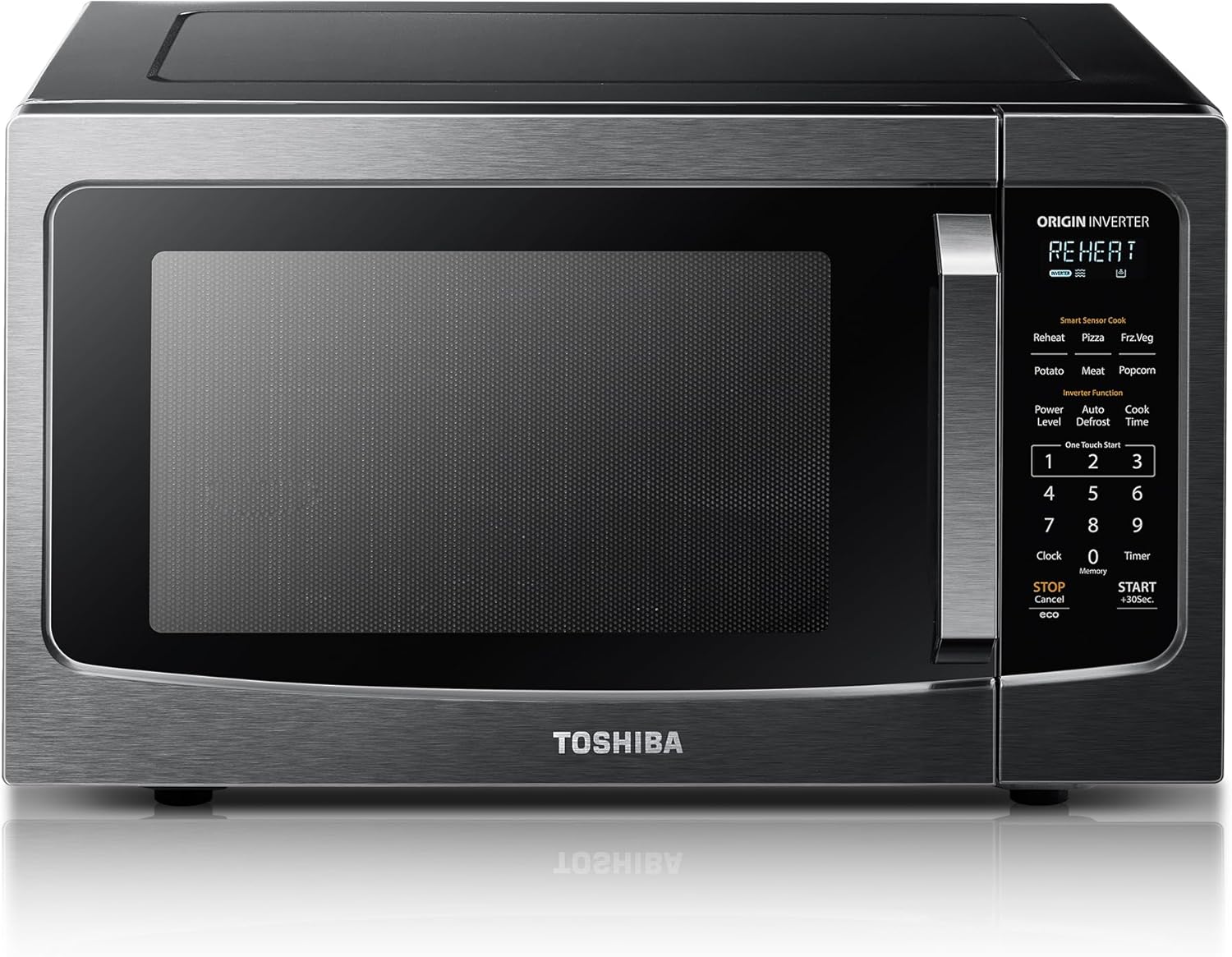
Key Details:
- 1.6 cu. ft. capacity with 13.6-inch turntable
- 1250W output with inverter technology
- Smart sensor cooking with 6 auto menus
- Black stainless steel countertop design
- Child lock, mute function, quick-start controls
Right away, the TOSHIBA ML-EM45PIT(BS) feels like a well-balanced inverter microwave oven that fits most kitchens without overcomplicating things. If you are looking for something that handles daily reheating, defrosting, and basic cooking with consistency, this model lands in that sweet spot. The 1250W power also means it is quick enough for busy routines, especially when you just want food heated properly without babysitting it.
When tested with typical meals like rice, leftovers, and frozen snacks, the inverter technology makes a noticeable difference. Instead of blasting heat unevenly, it keeps a steady flow of power, which helps avoid dry edges and cold centers. You will find this especially useful if you regularly reheat meals or defrost meat and want better texture instead of partially cooked food.
The smart sensor system is another thing we like here. It adjusts cooking time automatically based on moisture, so you are not constantly guessing. For everyday foods like vegetables, pizza, or potatoes, it simplifies the process. This is exactly what many people want when shopping for an inverter microwave oven that just works without extra effort.
If you want a reliable all-rounder, this is for you. The size is practical for families, and the feature set covers most real-life needs. Just keep in mind that while performance is solid, long-term reliability feedback is a bit mixed compared to some premium brands. Still, for overall performance, capacity, and ease of use, it is one of the most practical choices.
Pros:
- Strong 1250W power for fast and even cooking
- Inverter technology improves reheating and defrosting results
- Smart sensor menus reduce guesswork
- Spacious interior fits family-sized meals
Cons:
- Customer ratings are slightly inconsistent
- Takes up moderate counter space
2. Best Value: Panasonic Microwave Oven NN-SN686S
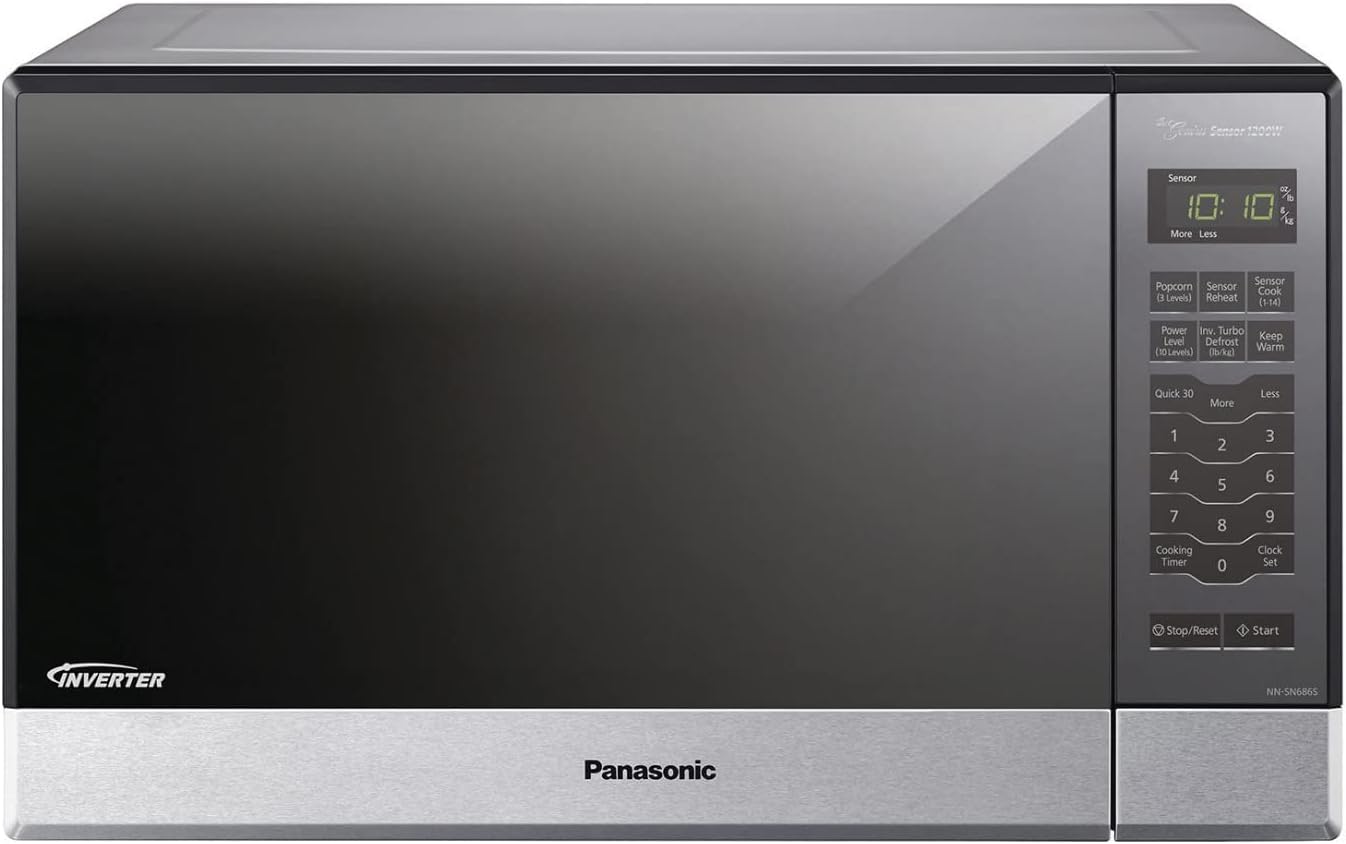
Key Details:
- 1.2 cu. ft. compact capacity
- 1200W cooking power with inverter system
- Genius Sensor with 14 auto programs
- Turbo Defrost and Keep Warm feature
- Countertop or built-in capable design
If you want something dependable without overspending, the Panasonic NN-SN686S is one of those inverter microwave ovens that quietly delivers where it matters. It has been around long enough to build trust, and when you use it, you quickly understand why it is still a go-to option. The compact size also makes it a great fit if your counter space is limited.
When tested with everyday foods, this Panasonic model tends to shine in consistency. The inverter technology keeps power steady, which helps when reheating leftovers or defrosting frozen items. You will notice fewer hot spots and less overcooking compared to traditional microwaves, which is exactly what people expect when upgrading to an inverter-based unit.
The Genius Sensor is another highlight. It adjusts cooking automatically based on steam levels, which means less guessing and fewer ruined meals. We like how simple it feels in real use. You press a button, and it handles the rest. Features like Turbo Defrost and Keep Warm also add small but meaningful improvements to daily cooking routines.
This is for anyone who wants a reliable inverter microwave oven without stepping into premium pricing. The only thing to consider is the smaller capacity, which may feel limiting for larger dishes. But if you are cooking for one to three people or need a secondary microwave, this one offers strong value and consistent performance.
Pros:
- Reliable Panasonic inverter performance
- Genius Sensor makes cooking easier
- Compact design saves counter space
- Useful features like Keep Warm and Turbo Defrost
Cons:
- Smaller interior limits larger dishes
- Warranty is relatively short
3. Best Air Fryer Combo: TOSHIBA Countertop Microwave Oven ML2-TC10SAIT(BS)
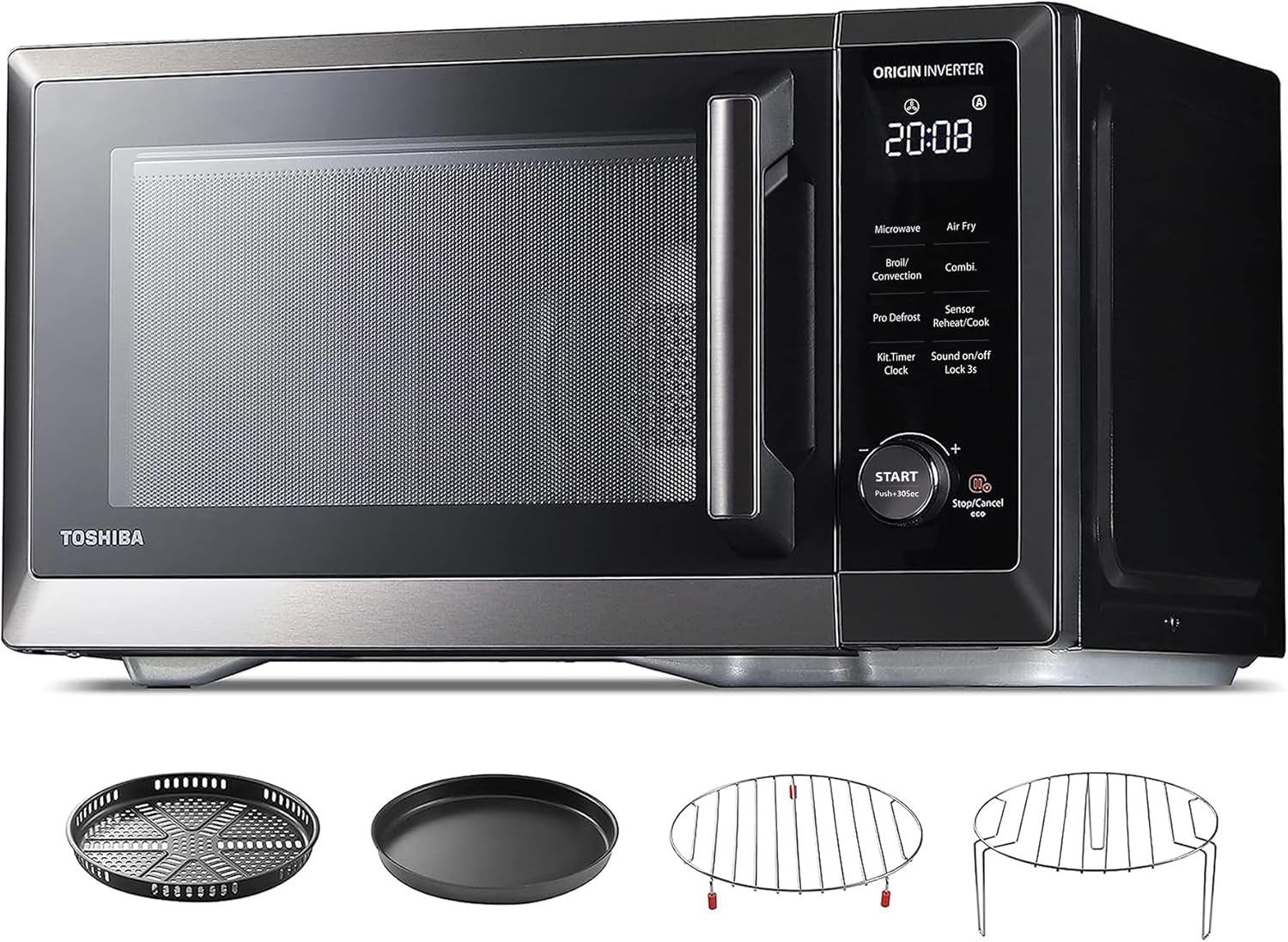
Key Details:
- 1.0 cu. ft. capacity
- 1000W microwave with inverter technology
- Air fryer, convection, broil, and combo modes
- Humidity sensor with multiple presets
- Includes air fry basket, trays, and racks
If you are trying to save space while getting more cooking flexibility, this TOSHIBA air fryer combo is an interesting pick. It is not just an inverter microwave oven, it also works as an air fryer and convection oven. So if you want one appliance to handle reheating, crisping, and baking, this is where it stands out.
When tested with foods like frozen fries, chicken nuggets, and leftovers, the combination modes make a difference. The inverter microwave function helps with even heating, while the air fryer and convection features add that crisp finish. You will find this especially useful if you enjoy quick meals but still want better texture than a standard microwave can provide.
Another thing we like is the versatility. With multiple auto menus and cooking modes, it covers a wide range of use cases. From defrosting meat to air frying snacks, it feels like a multi-purpose tool rather than just a microwave. That makes it a good fit for smaller kitchens where adding separate appliances is not practical.
This is for someone who wants more than basic microwave functionality. The trade-off is capacity. At 1.0 cu. ft., it is smaller than typical family models, so larger dishes may not fit comfortably. But if versatility matters more than size, this Toshiba combo delivers a lot in one unit.
Pros:
- Combines microwave, air fryer, and convection cooking
- Inverter technology improves heating consistency
- Great for crispy and reheated foods
- Includes useful cooking accessories
Cons:
- Smaller capacity limits larger meals
- More features require some learning time
4. Best Large Capacity Pick: Panasonic Microwave Oven NN-SN97JS
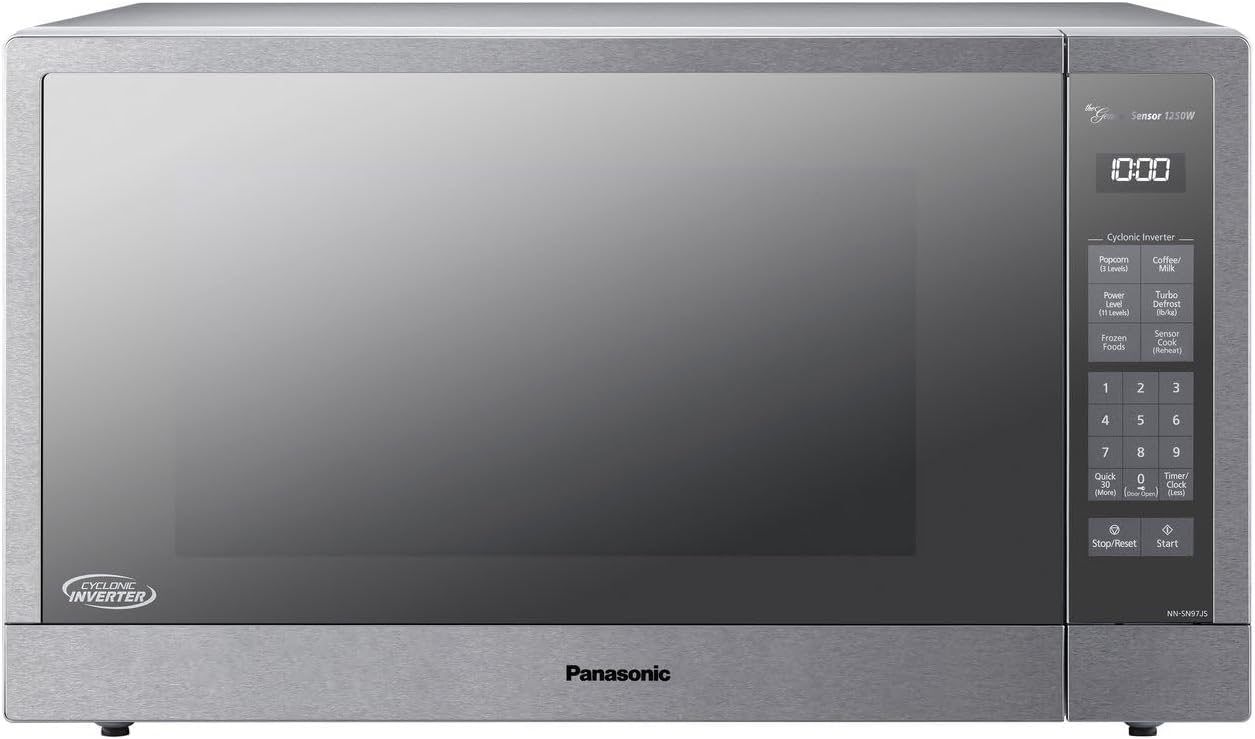
Key Details:
- 2.2 cu. ft. large capacity
- 1250W power with Cyclonic Inverter technology
- Genius Sensor with auto cooking adjustments
- Turbo Defrost and Keep Warm
- Countertop or built-in installation option
If you cook for a family or regularly heat large portions, the Panasonic NN-SN97JS is built for that kind of use. This inverter microwave oven offers a much larger interior than most standard models, which means you can fit bigger dishes without struggling for space. Right from the first use, it feels like it is designed for heavy daily use.
What stands out is the Cyclonic Inverter technology. It circulates heat more evenly across the cavity, which helps maintain consistent cooking even with large meals. When tested with bigger portions, this kind of system tends to reduce uneven heating, which is often a problem in large microwaves.
The Genius Sensor also helps keep things simple. You will find that it adjusts power and time automatically, so you do not have to keep checking your food. Features like Turbo Defrost and Keep Warm are especially useful here since larger households often cook in batches and need food ready at different times.
This is for those who need space and performance in one appliance. The Panasonic NN-SN97JS does take up more counter space and costs more than smaller models, so it is not for everyone. But if your priority is capacity, consistent heating, and reliable inverter performance, this is one of the strongest options available.
Pros:
- Large capacity is ideal for families
- Cyclonic inverter improves even cooking
- Smart sensor simplifies daily use
- Strong performance for big portions
Cons:
- Higher price compared to smaller models
- Requires more counter space
5. Best Multi-Function Value Pick: TOSHIBA Microwave Oven with Air Fryer ML2-EC09SAIT(BS)
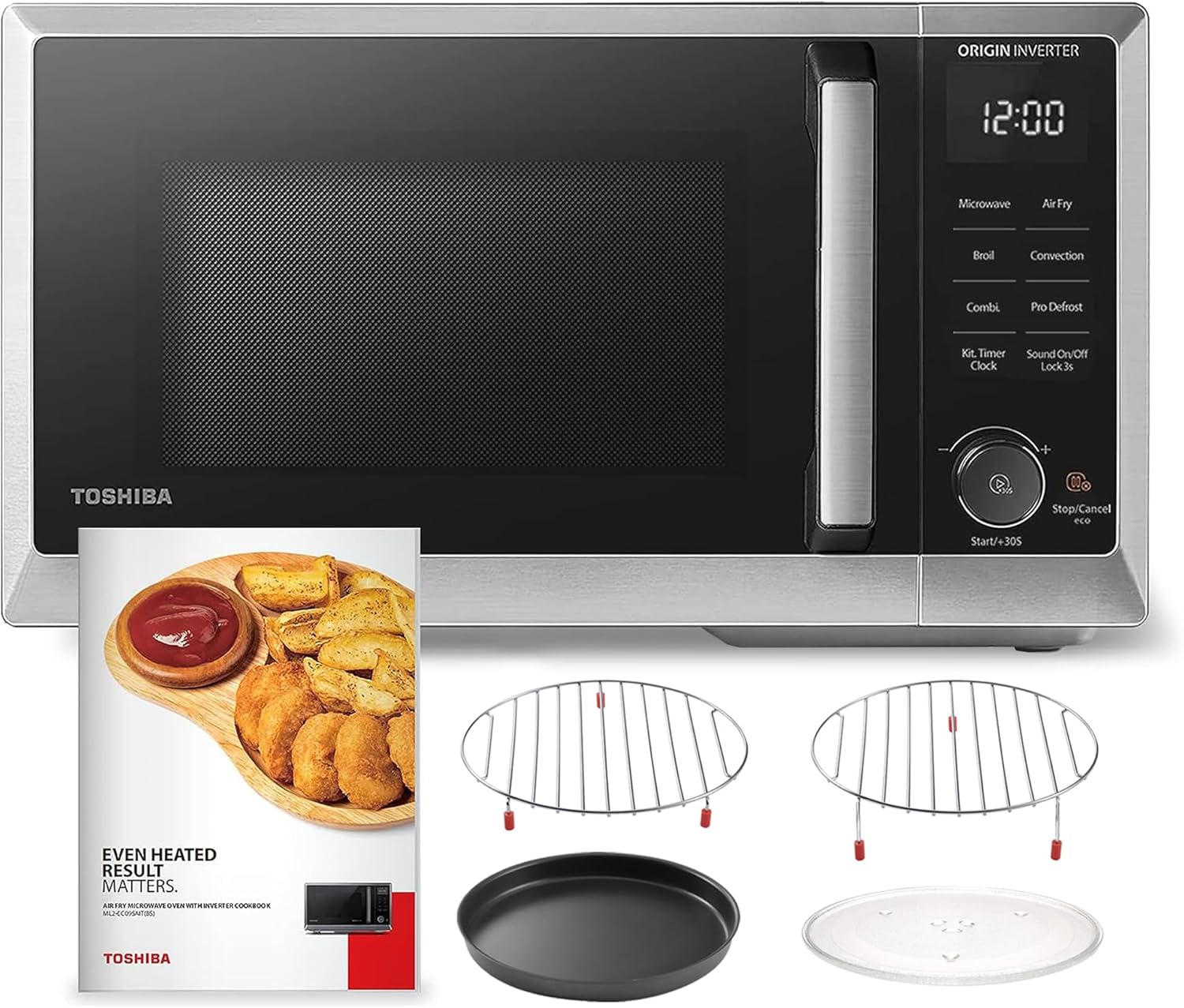
Key Details:
- 6-in-1 functionality: microwave, air fryer, convection, broil, combi, defrost
- 1800W convection power with inverter-based microwave system
- 10 power levels with 27 auto menus and air fry presets
- 360° heat circulation for crisp cooking
- Stainless steel design with low-noise operation (~50dB)
If you are looking for a more affordable multi-function inverter microwave oven, this TOSHIBA 6-in-1 model hits a really practical middle ground. It gives you air frying, convection baking, and microwave cooking in one unit, but at a slightly lower price than the more premium combo models. That makes it a strong pick if you want versatility without stretching your budget too far.
When tested with everyday foods, the inverter microwave side handles reheating and defrosting smoothly, while the air fryer and convection modes bring that extra crispness. You will notice this especially with frozen snacks or quick meals where texture matters. The combination modes also help speed things up, so food cooks faster while still getting that browned finish.
One thing we like here is how approachable it feels. Even though it has multiple cooking modes, the presets and menus make it easier to get started. You do not need to be an expert to use it effectively, which is important because combo appliances can sometimes feel overwhelming.
This is for someone who wants flexibility in a compact kitchen setup. The trade-off is that while it does many things, it does not specialize in one area as much as a dedicated appliance would. But if you want a capable inverter microwave oven that can also replace your air fryer and toaster oven, this one is a very practical choice.
Pros:
- Strong value for a 6-in-1 multifunction appliance
- Inverter cooking improves reheating and defrosting
- Air fry and convection add crisping and baking ability
- Good balance between price and features
Cons:
- Learning curve due to multiple cooking modes
- Not as spacious as larger standalone microwaves
6. Best Budget Pick: Emerson 1.2 Cu. Ft. Microwave Oven with Inverter MWI1212SS
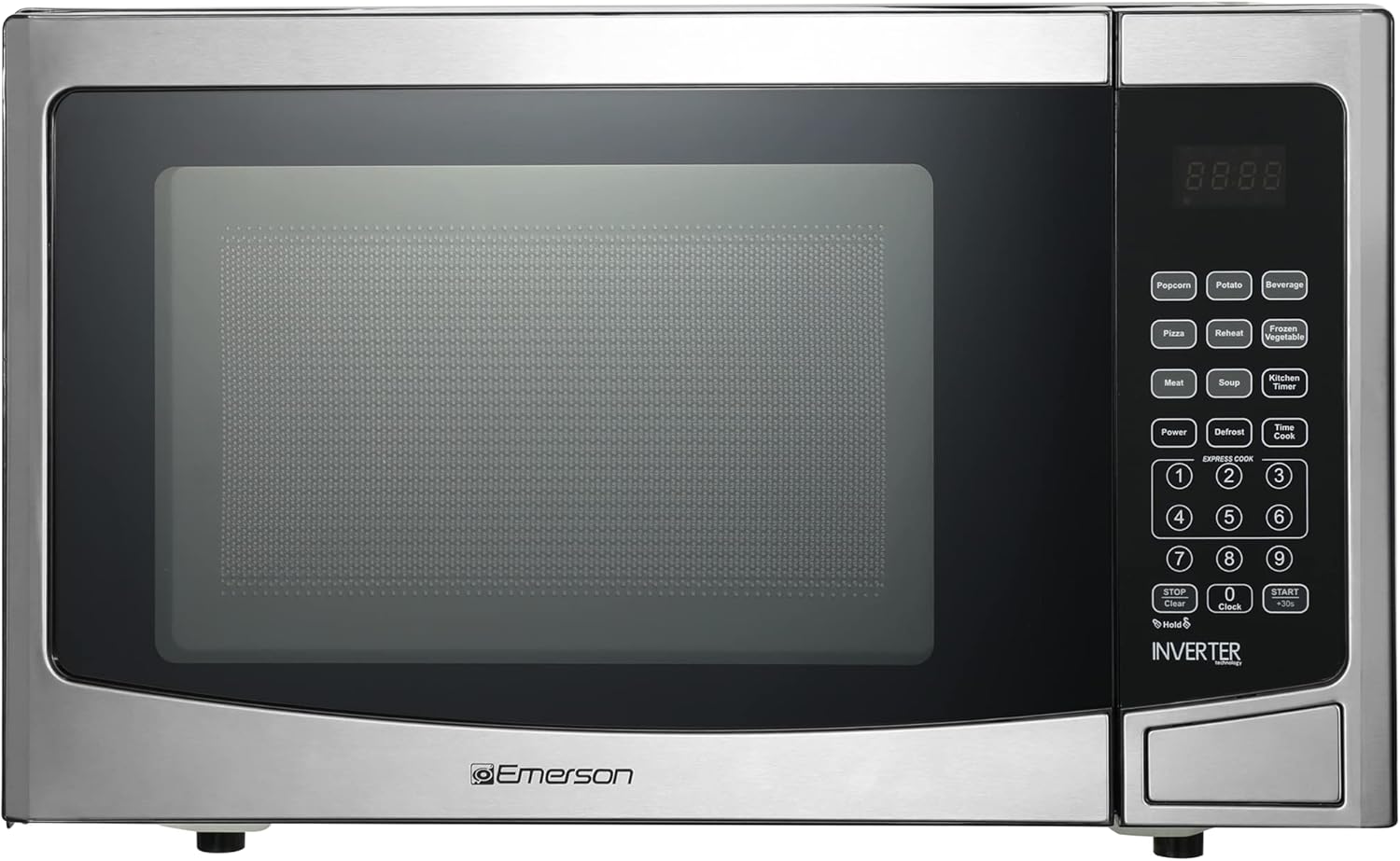
Key Details:
- 1.2 cu. ft. capacity
- 1000W inverter cooking power
- 10 adjustable power levels
- 8 preset cooking programs
- Push-open door with LED display
If you are trying to get into an inverter microwave oven without spending much, the Emerson MWI1212SS is one of the most budget-friendly ways to do it. It covers the essentials well enough, making it a solid option for basic cooking, reheating, and defrosting.
When tested with simple tasks like warming leftovers or defrosting frozen food, the inverter system helps maintain more even results compared to traditional low-cost microwaves. It is not as refined as higher-end models, but you will still notice fewer hot spots and more consistent heating overall.
The design is simple, and that is part of its appeal. The push-open door, clear LED display, and straightforward controls make it easy to use right out of the box. You will find this especially helpful if you prefer something that does not require navigating through too many menus or settings.
This is for anyone on a tighter budget or looking for a secondary microwave. Just keep in mind that the build quality and features are more basic compared to premium inverter microwave ovens. But for the price, it delivers the core benefit of inverter cooking without unnecessary extras.
Pros:
- Affordable entry into inverter microwave technology
- Simple and easy-to-use controls
- Compact size works well for small kitchens
- Consistent heating compared to basic microwaves
Cons:
- Limited advanced features and presets
- Build quality feels more basic
7. Best Flatbed Design: TOSHIBA Flatbed/No Turntable Design Microwave Oven ML-EM13PAITF(BS)
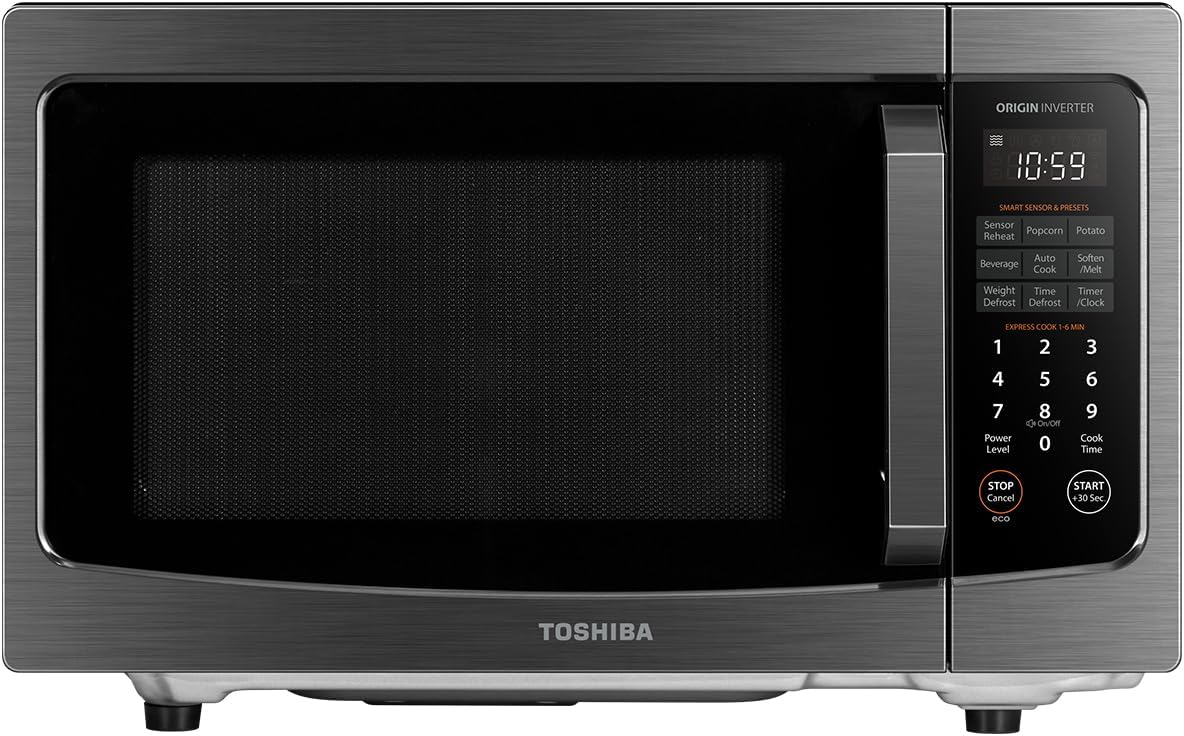
Key Details:
- 1.3 cu. ft. flatbed (no turntable) design
- 1200W inverter cooking power
- 11 power levels with smart sensor cooking
- Turntable-free interior for flexible dish placement
- Mute function and child safety lock
If you have ever struggled to fit larger or oddly shaped dishes into a microwave, the TOSHIBA ML-EM13PAITF(BS) solves that problem with its flatbed design. Instead of a traditional turntable, it uses a flat interior, which gives you more usable space and flexibility.
When tested with multiple plates and larger containers, this type of design makes a noticeable difference. You are not limited by a spinning tray, so you can place food more freely. The inverter technology also helps maintain even heating across the cavity, which is important since there is no rotating mechanism to distribute heat.
Another thing we like is how easy it is to clean. Without a turntable, there are fewer parts to remove and wipe down. The smart sensor cooking also works well for everyday foods, automatically adjusting power levels to avoid overcooking.
This is for anyone who values flexibility and convenience over traditional design. The only thing to consider is that flatbed microwaves can feel a bit different at first if you are used to turntables. But once you get used to it, it becomes a very practical upgrade.
Pros:
- Flatbed design allows flexible dish placement
- Inverter technology ensures even heating
- Easier to clean without a turntable
- Good balance of size and power
Cons:
- Learning curve if switching from turntable models
- Slightly higher price than basic microwaves
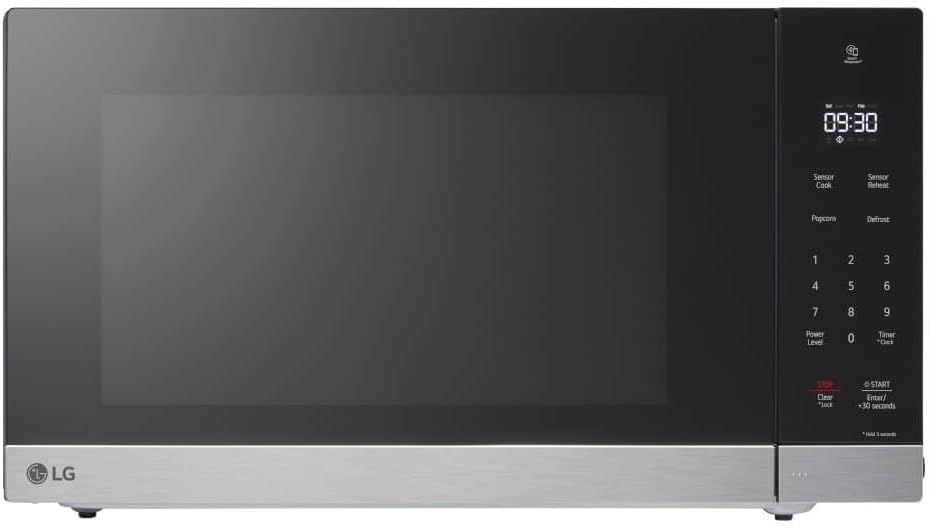
8. Best Premium Smart Pick: LG Countertop Microwave Mser2090s
Key Details:
- 2.0 cu. ft. large capacity
- 1200W Smart Inverter technology
- Sensor cooking with multiple presets
- SmoothTouch glass controls and LED lighting
- EasyClean interior with 10-year magnetron warranty
If you want a more refined and modern inverter microwave oven, the LG NeoChef stands out right away. The design feels cleaner and more premium, especially with the glass touch controls and minimalist look. It is the kind of appliance that fits well in a modern kitchen setup.
When tested with a variety of foods, the Smart Inverter system delivers consistent heating across different power levels. You will find that it handles both quick reheating and more delicate cooking tasks with better control. The larger 2.0 cu. ft. capacity also makes it suitable for families or anyone who uses a microwave frequently.
One feature that really adds convenience is the EasyClean interior. It resists stains and buildup, which makes maintenance much easier over time. The sensor cooking also helps automate common tasks, so you do not have to manually adjust settings for every meal.
This is for someone who wants a premium feel along with reliable inverter performance. The LG NeoChef is not the cheapest option, but the design, build quality, and long magnetron warranty add long-term value. If you care about both performance and aesthetics, this is a strong choice.
Pros:
- Premium design with modern touch controls
- Large capacity handles bigger meals easily
- Smart inverter improves cooking consistency
- EasyClean interior simplifies maintenance
Cons:
- Higher price compared to standard models
- Touch controls may take time to get used to
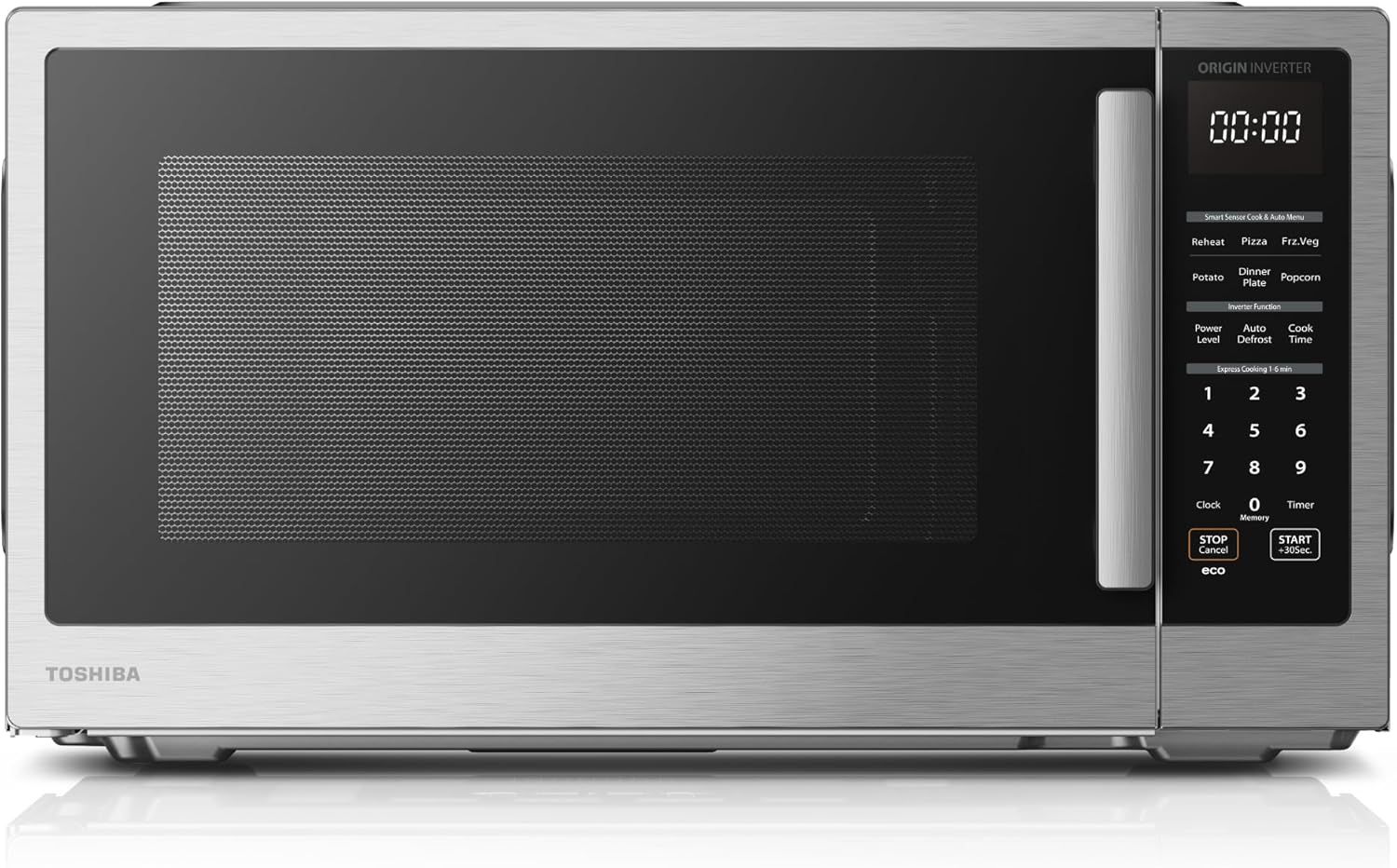
9. Best Large Family Option: TOSHIBA ML4-EM22PAIT(SS) Countertop Microwave Oven
Key Details:
- 2.2 cu. ft. large capacity with 16.5-inch turntable
- 1200W inverter cooking power
- Smart sensor with 6 auto menus
- 10 power levels for flexible cooking
- Child safety lock with touch control panel
If you regularly cook for multiple people or deal with large dishes, the TOSHIBA ML4-EM22PAIT(SS) is built with that in mind. This inverter microwave oven offers a spacious interior that can handle big plates, casserole dishes, and bulk reheating without feeling cramped. It is one of those models that immediately feels more practical for family use.
When tested with larger portions, the inverter system helps keep heating consistent across the dish. That matters more in a bigger cavity because uneven cooking can become more noticeable. You will find that it does a solid job reheating meals evenly and defrosting without cooking the edges too quickly.
The smart sensor feature also keeps things simple. It automatically adjusts cooking time based on moisture, which reduces guesswork for everyday foods. We like how this model focuses on core functionality rather than adding too many unnecessary extras, making it easy to use even for first-time buyers.
This is for anyone who needs space and reliability in a single unit. The only thing to consider is the size itself. It takes up more counter space than standard models, so you need enough room to accommodate it. But if capacity is your priority, this Toshiba is a very practical inverter microwave oven.
Pros:
- Large capacity is ideal for families and bigger meals
- Inverter technology improves even heating
- Simple and user-friendly controls
- Good value for a high-capacity model
Cons:
- Large footprint requires more counter space
- Fewer advanced features compared to premium models
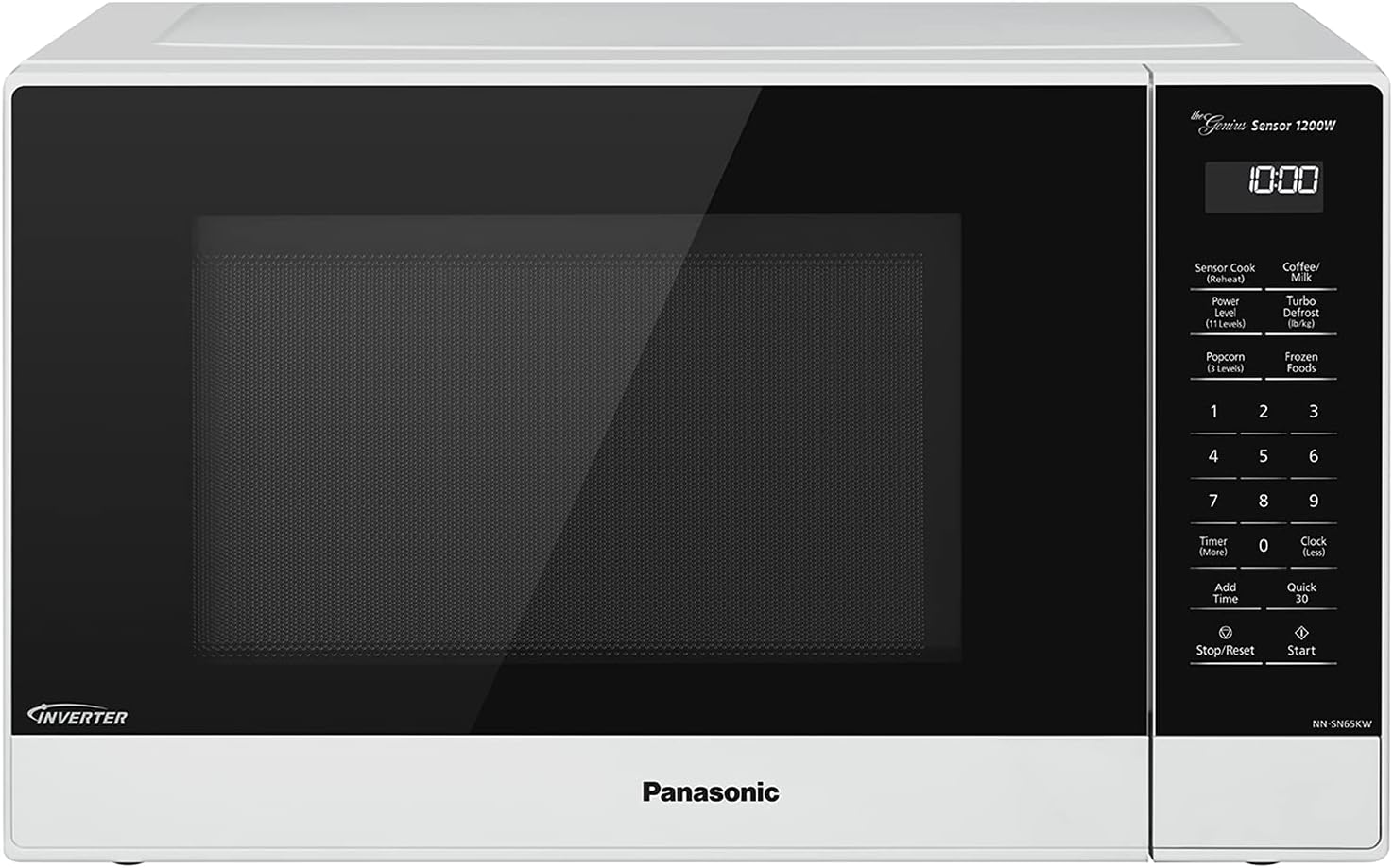
10. Best Compact Panasonic Pick: Panasonic NN-SN65KW Microwave Oven
Key Details:
- 1.2 cu. ft. compact capacity
- 1200W inverter cooking power
- Genius Sensor with 15 auto cook options
- Turbo Defrost and Keep Warm feature
- Space-saving countertop design
If you want a compact inverter microwave oven that still delivers strong performance, the Panasonic NN-SN65KW is a very solid option. It is designed to fit smaller kitchens, apartments, or dorm setups while still offering the core benefits of inverter technology.
When tested with everyday meals, this Panasonic model handles reheating and defrosting smoothly. The inverter system keeps power consistent, which helps avoid uneven heating. You will notice that leftovers come out more evenly warmed, and frozen items thaw more naturally without partially cooking.
The Genius Sensor makes a big difference in daily use. It adjusts cooking time automatically, so you do not have to keep checking or guessing. Features like Turbo Defrost and the popcorn button also add convenience, especially if you use your microwave frequently for quick meals and snacks.
This is for anyone who wants a reliable and space-efficient inverter microwave oven. The main trade-off is capacity. It may feel limiting if you regularly cook large portions. But for smaller households or secondary use, it delivers consistent performance in a compact form.
Pros:
- Compact size fits small kitchens easily
- Reliable Panasonic inverter performance
- Genius Sensor simplifies cooking
- Good balance of power and efficiency
Cons:
- Limited capacity for larger dishes
- Basic design compared to premium models
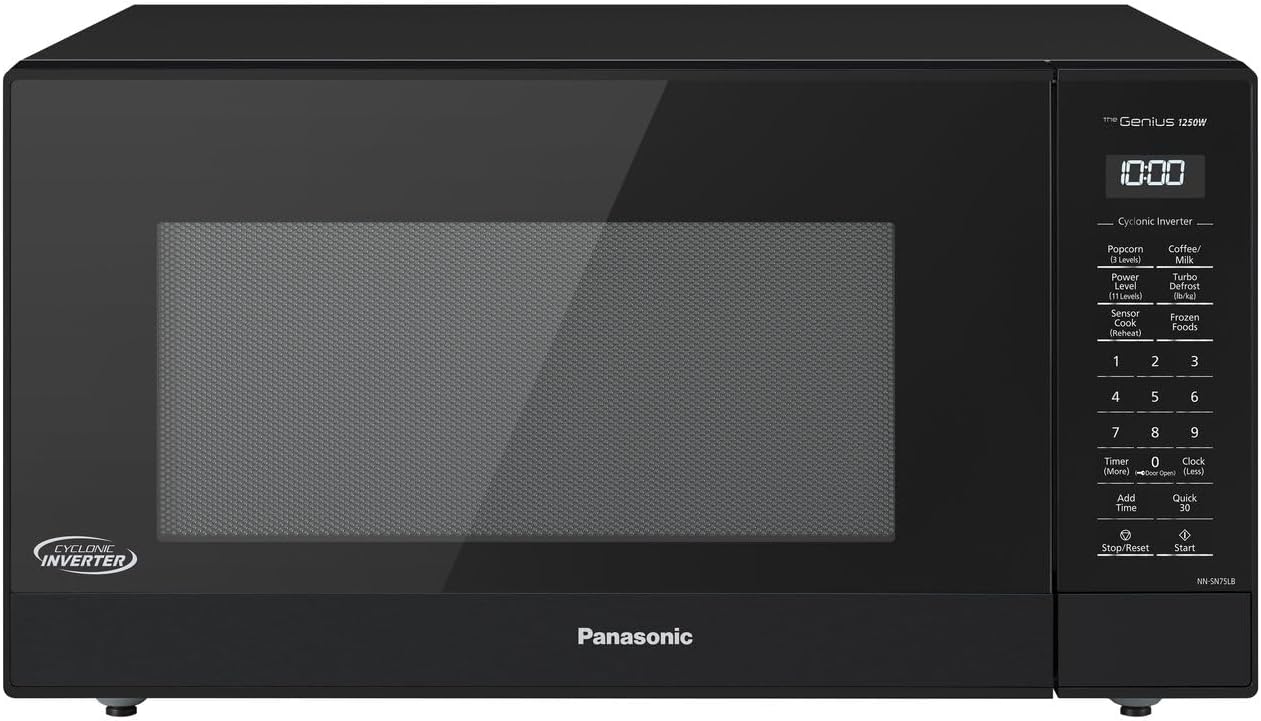
11. Best Mid-Size Panasonic Pick: Panasonic NN-SN75LB
Key Details:
- 1.6 cu. ft. capacity
- 1250W Cyclonic inverter power
- 20 preset auto cooking options
- Turbo Defrost and sensor reheat
- Compact footprint with large interior design
If you want something between compact and large, the Panasonic NN-SN75LB hits a very comfortable middle ground. This inverter microwave oven offers enough space for most family meals while still keeping a manageable footprint on your countertop.
The Cyclonic inverter technology is what sets this model apart. It circulates heat more efficiently, which helps maintain consistent cooking across the entire dish. When tested with mixed foods and larger portions, this kind of system tends to produce more even results compared to standard inverter models.
Another thing we like is how easy it is to use. With dedicated buttons for popcorn, quick start, and keep warm, it simplifies everyday tasks. The sensor cooking options also help automate common meals, making it more convenient for busy routines.
This is for anyone who wants a balanced inverter microwave oven with solid performance and a reasonable size. It is not the cheapest option, but it offers a good mix of features and consistency. If you want something reliable without going too large or too small, this Panasonic model fits well.
Pros:
- Balanced size suitable for most households
- Cyclonic inverter improves even cooking
- Easy-to-use controls with helpful presets
- Strong performance for everyday cooking
Cons:
- Slightly higher price than basic models
- Design is simple compared to premium options
12. Best Small Compact Pick: Panasonic Countertop Microwave Ovens NN-SD47QSDAYH
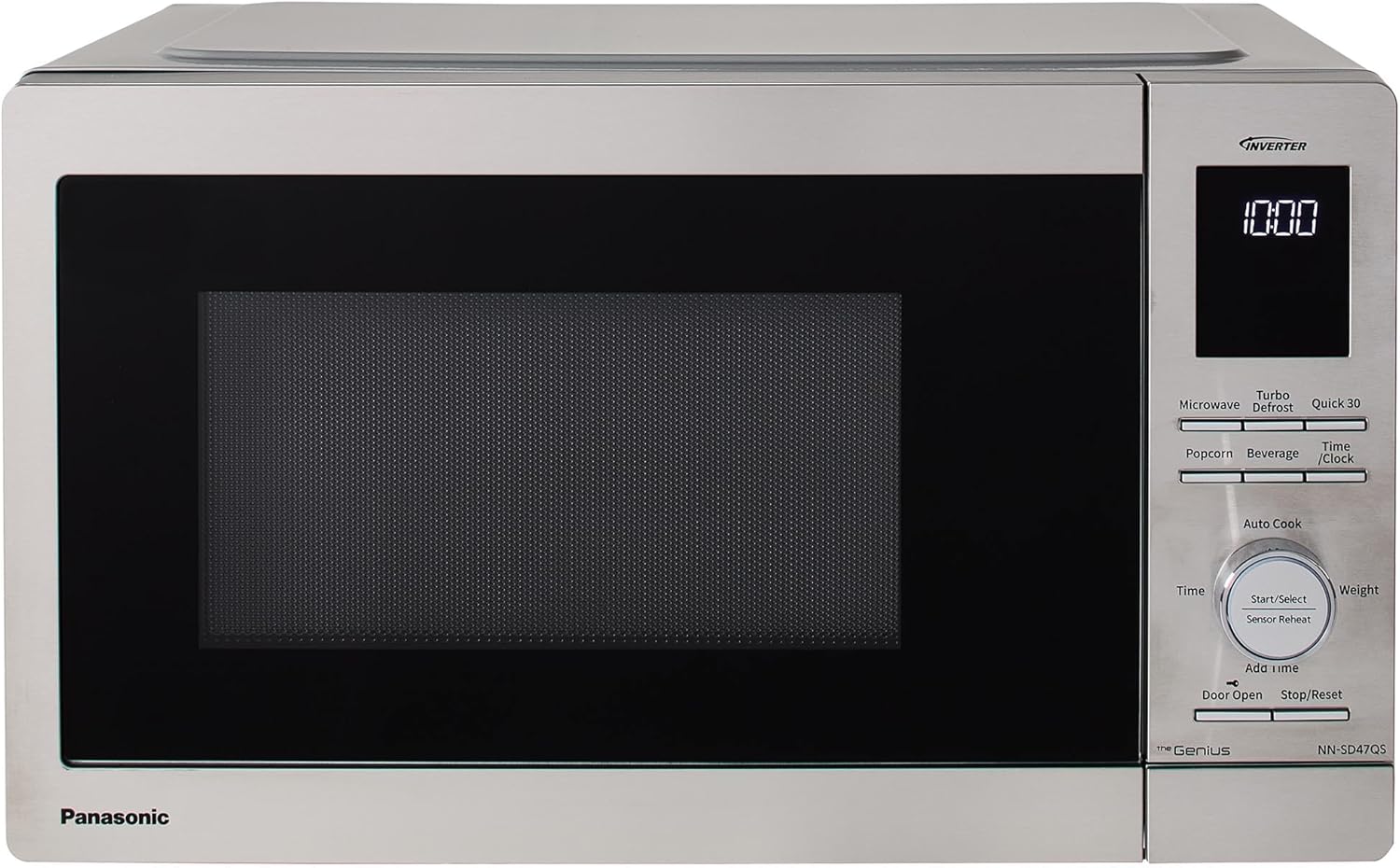
Key Details:
- 0.9 cu. ft. compact capacity
- 1000W inverter cooking power
- 15 auto cooking presets with Genius Sensor
- Turbo Defrost and Keep Warm
- Easy-clean interior with LED lighting
If space is your biggest concern, the Panasonic NN-SD47QSDAYH is one of the smallest inverter microwave ovens that still feels fully functional. It is designed for tight kitchens, dorm rooms, or anyone who does not need a large cooking cavity.
When tested with basic tasks like reheating drinks, small meals, and defrosting, it performs reliably. The inverter technology ensures more even heating compared to traditional compact microwaves, which often struggle with consistency. You will find it especially useful for quick daily use rather than heavy cooking.
The Genius Sensor and auto presets also help make cooking easier. Even in a smaller unit, you still get features that adjust cooking time automatically, which is a nice touch. It keeps things simple while still delivering the benefits of inverter-based cooking.
This is for anyone who needs a compact and efficient inverter microwave oven. The main limitation is size, as larger dishes will not fit comfortably. But if you want something small, reliable, and easy to use, this Panasonic is a great fit.
Pros:
- Very compact size for small spaces
- Inverter technology improves heating consistency
- Easy-to-use presets and sensor cooking
- Simple maintenance with easy-clean interior
Cons:
- Limited capacity for larger meals
- Lower power compared to larger models
Who Should Buy an Inverter Microwave Oven?
An inverter microwave oven is ideal when you want more control over cooking and consistent results. Traditional microwaves cycle power on and off, but inverter models maintain steady power, which improves texture and prevents uneven heating.
If you often reheat leftovers, defrost frozen food, or cook delicate items like vegetables or fish, you will notice the difference quickly. In our experience, inverter cooking reduces dry edges and cold spots.
- Busy households benefit because inverter microwaves reduce cooking time and improve consistency.
- Families benefit because larger models handle bulk meals and multiple servings easily.
- Health-conscious users benefit because inverter cooking preserves texture and nutrients better.
- Small kitchen owners benefit because compact inverter models offer efficiency without taking much space.
- Multi-tasking cooks benefit because combo models replace air fryers, ovens, and microwaves in one unit.
Can Inverter Microwaves Save Energy Compared to Regular Models?
Inverter microwave ovens use energy more efficiently because they deliver continuous power instead of cycling on and off. This reduces energy waste during cooking.
Traditional microwaves operate by switching between full power and zero power, which leads to uneven cooking and inefficient energy use. In contrast, inverter technology maintains a steady output, which improves both cooking performance and energy usage.
In practical terms, inverter microwaves save energy by cooking food faster and more evenly. When cooking is efficient, total energy consumption decreases. Over time, this can reduce electricity usage, especially if you use your microwave frequently.
How to Choose the Best Inverter Microwave Oven
Choosing the right inverter microwave oven depends on how you cook, how much space you have, and how often you use it. If you focus on a few key factors, you will avoid overpaying or ending up with features you do not need.
Capacity
Capacity determines how much food you can cook at once. A 0.9 to 1.2 cu. ft. microwave works well for individuals or small kitchens. A 1.3 to 1.6 cu. ft. unit suits everyday family use. A 2.0 cu. ft. or larger model supports large meals and batch cooking. If you often heat large plates or cookware, you will benefit from a bigger cavity.
Power (Wattage)
Power level affects cooking speed and consistency. Wattage directly impacts performance. A 1000W unit handles basic reheating and defrosting. A 1200W to 1250W inverter microwave delivers faster cooking and better results for dense foods. Higher power also ensures consistent heating across larger portions.
Inverter Technology
Inverter technology improves cooking precision. Inverter systems maintain steady power instead of cycling on and off. This means food cooks evenly at lower power levels. If you cook delicate foods like fish or vegetables, inverter technology prevents overcooking and improves texture.
Sensor Cooking
Sensor cooking reduces guesswork. Smart sensors detect moisture and adjust cooking time automatically. This improves accuracy when reheating or cooking preset foods. If you prefer convenience, this feature reduces the need for manual adjustments.
Multi-Function Features
Multi-function features expand usability. Some inverter microwaves include air fryer, convection, or broil functions. These models replace multiple appliances. If you want a single unit for baking, crisping, and reheating, a combo model provides more flexibility.
Size and Design
Size and design impact kitchen fit and usability. Counter space matters. Compact models fit small kitchens, while larger units require more room. Flatbed designs remove the turntable, allowing flexible dish placement. If you use large or odd-shaped containers, flatbed designs offer better usability.
Inverter vs Traditional Microwave: Which Should You Choose?
If you are deciding between an inverter microwave and a traditional model, the key difference comes down to how power is delivered. This directly affects cooking quality, efficiency, and overall performance.
| Feature | Inverter Microwave | Traditional Microwave |
| Power Delivery | Continuous and stable | Cycles on and off |
| Cooking Result | Even heating | Uneven heating |
| Defrosting | Gentle and consistent | Edges may overcook |
| Energy Efficiency | More efficient | Less efficient |
| Food Texture | Better moisture retention | Can dry out food |
| Price | Slightly higher | More budget-friendly |
An inverter microwave is the better choice if you want consistent cooking and improved food quality. A traditional microwave may still work for basic reheating, but it lacks precision and efficiency.
How Much Power Does an Inverter Microwave Saves?
An inverter microwave saves energy by reducing wasted power during cooking. Traditional microwaves operate at full power in cycles, while inverter models maintain steady output.
Let’s break this down with a simple example.
Energy consumption formula:
Energy (kWh) = Power (kW) × Time (hours)
Example comparison:
Traditional microwave:
Power = 1200W = 1.2 kW
Time = 10 minutes = 0.167 hours
Energy = 1.2 × 0.167 = 0.20 kWh
However, traditional microwaves cycle power on and off. During lower settings, they still use full power intermittently, which increases inefficiency.
Inverter microwave:
Power = 1200W but runs at a steady reduced level
Effective usage = about 70% to 90% of full power depending on setting
Energy = 1.2 × 0.167 × 0.8 = 0.16 kWh
Difference:
0.20 kWh − 0.16 kWh = 0.04 kWh saved per use
Over time:
If you use your microwave twice daily:
0.04 × 2 × 365 = 29.2 kWh saved annually
Inverter microwaves reduce energy waste by maintaining consistent power. This improves cooking efficiency and lowers total electricity usage over time.
Can Inverter Microwaves Handle Heavy Daily Use?
Inverter microwaves are designed for consistent and frequent use. Their steady power delivery reduces stress on internal components compared to traditional models that constantly cycle on and off.
When used daily, inverter systems maintain performance stability. This means less overheating and more reliable cooking results over time. Many premium models also include better cooling systems and durable magnetrons.
If you use your microwave multiple times a day for reheating, defrosting, or cooking, an inverter microwave is a dependable option. It handles frequent usage while maintaining consistent performance.
Safety Tips When Using an Inverter Microwave Oven
Using an inverter microwave oven safely ensures long-term performance and prevents accidents. These appliances are generally safe, but proper usage matters.
Always follow basic precautions to avoid damage or hazards.
- Use microwave-safe containers to prevent chemical release or melting
- Avoid running the microwave empty to protect internal components
- Keep vents clear to prevent overheating
- Do not use metal objects unless the model supports it
- Clean the interior regularly to prevent buildup and odor
- Keep children supervised when using the appliance
- Follow manufacturer guidelines for power settings and usage
These simple practices help maintain safety and extend the lifespan of your microwave.
Final Words
If you want a reliable all-round performer, the Panasonic Microwave Oven NN-SN686S is a strong choice. It delivers high power, consistent inverter cooking, and a large capacity that works well for families and everyday heavy use. If you need something that simply works without compromise, this model fits that role.
If you prefer versatility in one appliance, the TOSHIBA Microwave Oven with Air Fryer ML2-EC09SAIT(BS) Air Fryer Combo stands out. It combines microwave, air fryer, and convection cooking, which makes it ideal when you want to replace multiple kitchen appliances with one compact unit.
If design and modern usability matter more to you, the LG Countertop Microwave Mser2090s is a great option. It offers a premium look, smooth touch controls, and reliable cooking performance, making it perfect for modern kitchens.
Overall, inverter microwave ovens provide better cooking consistency, improved energy efficiency, and more control compared to traditional models. If you choose based on your cooking needs, space, and features, you will end up with a microwave that performs reliably for years.
Related FAQs
What does an inverter microwave oven do better than a regular microwave?
An inverter microwave oven cooks food more evenly because it delivers continuous power. This improves texture and prevents overcooking compared to traditional microwaves that cycle power on and off.
Can an inverter microwave cook faster?
An inverter microwave can cook more efficiently because it maintains steady power. This reduces cooking time slightly and improves overall heating consistency.
Is an inverter microwave worth buying?
An inverter microwave is worth buying if you want better cooking results and energy efficiency. It is especially useful for reheating, defrosting, and cooking delicate foods.
Do inverter microwaves use less electricity?
Inverter microwaves use electricity more efficiently because they avoid power cycling. This reduces energy waste and improves cooking performance over time.
Are inverter microwaves safe for daily use?
Inverter microwaves are safe for daily use when used properly. They include safety features like child locks and temperature controls for reliable operation.

Max Fletcher is a self-taught electrician-turned-baker who combines technical know-how with a love for baking to help readers get the most from their ovens. Drawing on years of electrical experience and hands-on kitchen testing, he shares practical guides and reviews on oven performance, safety, and baking results, all with the heart of a family man who believes great food starts with understanding your tools.